Croatia Islands Guide 2025: Hidden Gems, Real Costs and Insider Routes

By Yacht Week
Posted on 6th November 2025
TL;DR
We’ve sailed the Croatia islands for 18+ years, hosting over 70,000 guests across the Adriatic Sea. This guide shows you which Croatian islands are worth visiting, what each island is best known for, how much it really costs, and when to go. You’ll see ratings, insider comparisons, and tables that make choosing simple. Whether you’re after stunning beaches, medieval old towns, or the quiet of a distant island, we’ll help you decide.
Why We Know the Croatia Islands Better Than Any Guidebook
Since 2006, our team has operated on the Dalmatian coast, designing weeks that combine yachts, curated routes, and safe sailing with authentic encounters. We’ve walked lavender fields on Hvar Island, kayaked the lakes of Mljet National Park, and watched sunsets from Korčula Island’s medieval walls. These are not tourist snapshots; they’re experiences we’ve repeated for nearly two decades.
Our flagship Croatia Original program shows what’s included in curated weeks, while guest reviews capture why so many describe them as life-changing. This isn’t theory, it’s a lived record across more than a thousand islands.
Croatia Islands in Numbers That Matter
| Metric | Detail | Why It Matters |
|---|---|---|
| Coastline | 5,835 km (longer than the US West Coast) | Endless sheltered coves & stunning beaches |
| Count | Over 1,200 landforms, ~50 inhabited | Mix of uninhabited islands & lively towns |
| Sunshine | 2,700+ hours yearly on Hvar Town | Among the sunniest in Europe |
| Highest Peak | Vidova Gora (780 m) on Brač Island | Panorama of seven Adriatic islands |
| UNESCO | Diocletian’s Palace, Dubrovnik Walls | Pair island trips with old town day trips |
This density explains why island hopping Croatia feels effortless: short passages, predictable winds, and dozens of harbors that link culture with nature.
Best Croatian Islands for Different Travelers
Hvar Island: Nightlife Meets Lavender Fields
| Detail | Information |
|---|---|
| Vibe | ⭐⭐⭐⭐⭐ Party + culture blend |
| Best for | Glam nights in Hvar Town, Pakleni Archipelago swims |
| Beach | Dubovica (pebble cove) |
| Highlight | Sunset from Fortica Fortress above the town centre |
| Sunshine Hours | 2,715 annually (sunniest in Croatia) |
| Population | ~11,000 residents |
Hvar Island balances glamour with heritage. Hvar Town is alive with yachts, Renaissance architecture, and nights that stretch from Hula Hula Beach Bar to hidden coves in the Pakleni Archipelago. Yet step a few streets back, and you’ll find lavender fields, olive groves, and klapa singers in stone courtyards. That mix of high-energy evenings and preserved traditions is why Hvar consistently ranks among the best Croatian islands.
Vis Island: Time Capsule of the Adriatic
| Detail | Information |
|---|---|
| Vibe | ⭐⭐⭐⭐ Authentic, historic, cinematic |
| Best for | Stiniva Beach, WWII history, and authentic fishing villages |
| Beach | Stiniva, crowned Europe’s Best Beach 2016 |
| Highlight | Dining and events at Fort George |
| Population | ~3,400 residents |
| Tourist Ratio | 2.8 visitors per resident in peak season |
Closed to foreigners until 1989, Vis Island preserved its fishing traditions and slower pace. Markets in Komiža still drive daily life, while beaches like Stiniva and the famous Blue Cave add cinematic drama. Evenings at Fort George mix history and music in a British-built fortress. Despite Hollywood fame, Vis feels authentic and uncrowded, making it a true counterpoint to Hvar.
Brač Island: Peaks, Marble, and Zlatni Rat
| Detail | Information |
|---|---|
| Vibe | ⭐⭐⭐⭐ Adventure + heritage |
| Best for | Zlatni Rat Beach, windsurfing, and stone heritage |
| Beach | Zlatni Rat, shape-shifting sand and pebble spit |
| Highlight | Sunrise hike to Vidova Gora (the highest point in the Adriatic) |
| Population | ~13,800 residents |
| Tourist Ratio | White marble used in Diocletian’s Palace |
Brač Island is famous for Zlatni Rat Beach, a natural spit that changes shape with tides and winds. Inland, marble quarries supplied stone for Split’s Diocletian’s Palace and buildings worldwide.
The island is also home to Vidova Gora, the highest point among Adriatic islands, offering breathtaking views. Windsurfing thrives near Bol thanks to reliable breezes, while inland villages serve lamb cooked under peka, a centuries-old tradition. For many, Brač represents the balance between adrenaline and heritage.
Korčula Island: Wine and Walled Magic
| Detail | Information |
| Vibe | ⭐⭐⭐⭐ Cultural, layered |
| Best For | Fortified old town, sword dances, wine traditions |
| Beach | Sheltered coves in southern Dalmatia |
| Highlight | The Moreška sword dance is performed weekly in the summer |
| Population | ~15,500 residents |
| Historical Claim | Possible birthplace of Marco Polo |
Korčula Island is a cultural anchor among the Croatia islands. Its walled old town follows a herringbone layout that keeps streets breezy in summer. Cultural traditions endure, from the Moreška sword dance to winemaking that produces unique varietals like Pošip and Grk. Legends of Marco Polo give it added intrigue. Beyond the walls of Korčula Town, pine roads lead to coves, olive groves, and handmade pasta kitchens.
Festivals, gastronomy, and history create a layered experience that appeals to travelers seeking more than beaches. Our feature on 5 Beautiful Old Towns in Croatia highlights Korčula as one of the cultural anchors of the best Croatian islands.
Mljet Island: National Park Paradise
| Detail | Information |
| Vibe | ⭐⭐⭐⭐⭐ Nature-first |
| Best For | Lakes inside Mljet National Park, pine forest retreats |
| Beach | Warm saltwater lakes are ideal for swimming |
| Highlight | 12th-century monastery on a tiny islet |
| Population | ~1,000 residents |
| Coverage | 33% of the island is protected as a national park |
Mljet Island is Croatia’s green escape. Over 70 percent is covered in pine forest, and one-third falls within Mljet National Park. It's two salt lakes that warm up to 28°C in summer, perfect for kayaking or swimming. A Benedictine monastery on a tiny islet inside Veliko Jezero adds history to this natural sanctuary. Wildlife thrives here, from mongooses to exotic fish, making Mljet a peaceful retreat after the busier southern routes.
Rab Island: Sandy Family Favorite
| Detail | Information |
| Vibe | ⭐⭐⭐ Family-friendly, relaxed |
| Best For | Sandy beaches, summer festivals, and a history-rich town |
| Beach | Lopar’s Paradise Beach (sand) |
| Highlight | Four medieval towers of Rab Town |
| Population | ~9,300 residents |
| Heritage | A mix of Romanesque churches and Gothic detail |
Rab Island is unusual for the Adriatic because it offers sandy beaches, rare in this region of mostly pebble shores. Lopar’s Paradise Beach is the biggest draw, with long shallow stretches that are safe for families with children.
Rab Town stands proudly with four medieval bell towers that form one of Croatia’s most photographed skylines. Cultural traditions remain strong, with summer fairs and performances held in the town centre.
The island is easy to reach thanks to short ferry rides and reliable connections, which add convenience to its charm. Inland, you find olive groves and local artisans continuing centuries of craft.
Rab balances relaxation with culture, making it one of the best Croatian islands for travelers who want leisure without losing the sense of place.
Long Island (Dugi Otok): Wild Northern Frontier
| Detail | Information |
| Vibe | ⭐⭐⭐ Remote and untamed |
| Best For | Telašćica cliffs, Kornati access, solitude |
| Beach | Sakarun (white sand) |
| Highlight | Salt lake inside Telašćica Nature Park |
| Population | ~1,600 residents |
| Length | 45 km, with rugged western cliffs |
Long Island, or Dugi Otok, sits in northern Croatia and feels like a frontier compared to southern hubs. It stretches 45 kilometers but has only around 1,600 residents, giving it a raw, untamed quality.
The western cliffs of Telašćica Nature Park rise 160 meters above the Adriatic Sea, while Sakarun Bay offers one of Croatia’s rare white-sand beaches. The island provides a gateway to Kornati National Park, a maze of uninhabited islands and marine life that divers call world-class.
Life here moves slowly, with sheep farming, fishing, and small-scale agriculture still shaping daily rhythms. Villages remain quiet, and public transport is limited, making it ideal for travelers seeking real solitude. Our Destination Guide includes Long Island for those who want to trade nightlife for wilderness, making it a different kind of stop among the best islands in Croatia.
Real Costs on Croatia Islands
Typical Daily Spend
| Category | Budget | Mid-Range | High-End |
| Meals | €20–40 | €50–80 | €120+ |
| Stays | €45–80 guesthouses | €120–200 boutique | €300+ resorts |
| Drinks | €15–25 | €40–60 | €100+ |
| Ferries | €8–25 | €25–45 catamarans | €200+ speedboat |
Traveling the Croatia islands comes with a wide spectrum of costs depending on your style. Budget travelers can get by at €60 per day with hostel beds and simple meals, while a mid-range trip runs closer to €150.
Luxury guests easily spend €400 per day, especially on sandy beach resorts or fine dining in Hvar Town. The real expenses are often not planned: spontaneous wine tastings in a fishing village, taxi boats to sheltered coves, or extra nights in old towns.
Old Towns Worth Visiting Alongside the Islands
Cultural Highlights
| Town | Key Feature | Why Visit |
| Split | Diocletian’s Palace | Ancient Roman living city |
| Dubrovnik | Fortified walls | Cinematic history & culture |
| Trogir | Gothic Renaissance Cathedral | UNESCO World Heritage site |
The Croatia islands shine brightest when paired with the mainland's old towns. Split anchors most routes with its living Roman palace, where 3,000 people still reside inside UNESCO walls. Dubrovnik, the jewel of southern Dalmatia, offers dramatic walks along fortifications and Franciscan monasteries.
Trogir, often skipped, is a gem of Renaissance architecture with compact squares perfect for evening strolls. Exploring these towns before or after your sailing week deepens the experience. For deeper inspiration, see 5 Beautiful Old Towns in Croatia.
When to Visit Croatia Islands
| Season | Best For | Watch Out For |
| July–August | Warmest seas, lively party islands | Crowds, prices peak |
| May–June, Sept | Balance of value, weather, events | Slightly cooler water |
| Oct–Apr | Authentic life, local produce | Reduced ferries, closures |
Timing defines your Croatia island experience. Summer delivers 25–26°C waters and buzzing nightlife, but ferry tickets sell out and accommodation prices triple. Shoulder months — May, June, and September- bring the same beautiful beaches, long daylight hours, and open restaurants without overwhelming crowds.
For cultural immersion, October through April shows the fishing villages and traditions without a tourist filter. Many travelers now plan for September, which blends affordability, festivals, and warm seas.
Conclusion: The Croatia Islands Change You
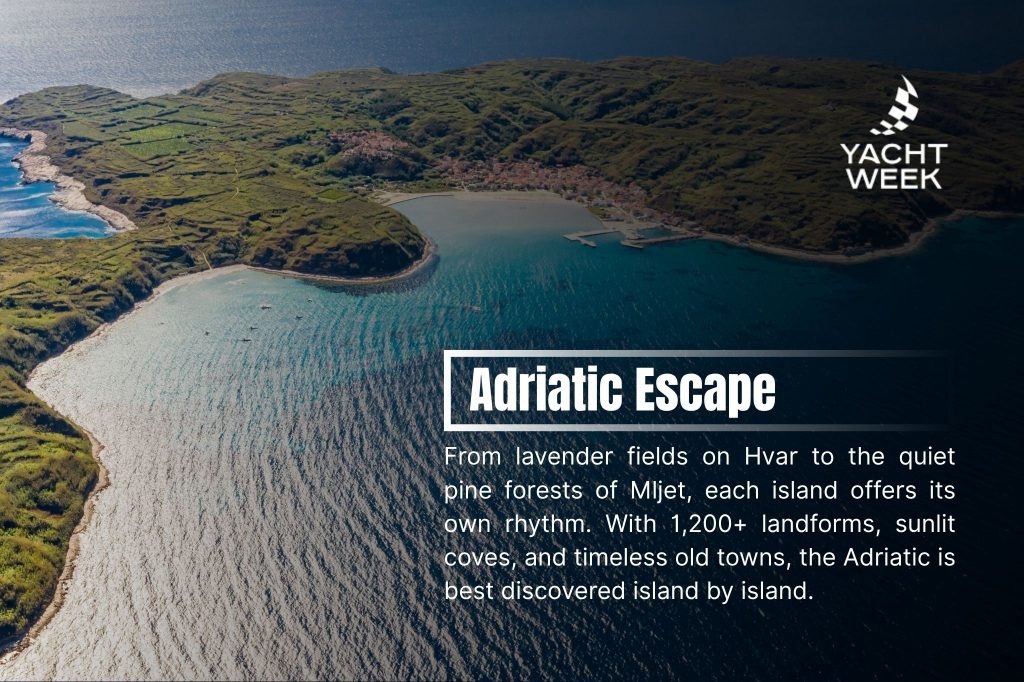
The Croatia islands are more than just stunning islands; they are transformations waiting to happen. The scent of lavender in Hvar Town, the echo of klapa songs in stone courtyards, and the stillness of pine forests on Mljet Island each moment leave a mark.
Sailing between them reveals contrasts: party islands alive until dawn, followed by quiet mornings in sheltered coves. Visits to old towns show heritage carved in marble and preserved in Romanesque churches.
Guests tell us year after year that Croatia changes how they see travel itself. When you are ready to map your own route, explore our Croatia Original, compare yachts through our guide, and read our reviews. The archipelago always delivers more than expected, and the feeling follows you home long after the journey ends.