The easy opener
Šolta
Šolta is the easy opener. It is the shortest hop from Split, around 30 minutes by catamaran to Rogač, which makes it a good first night or a simple day trip.
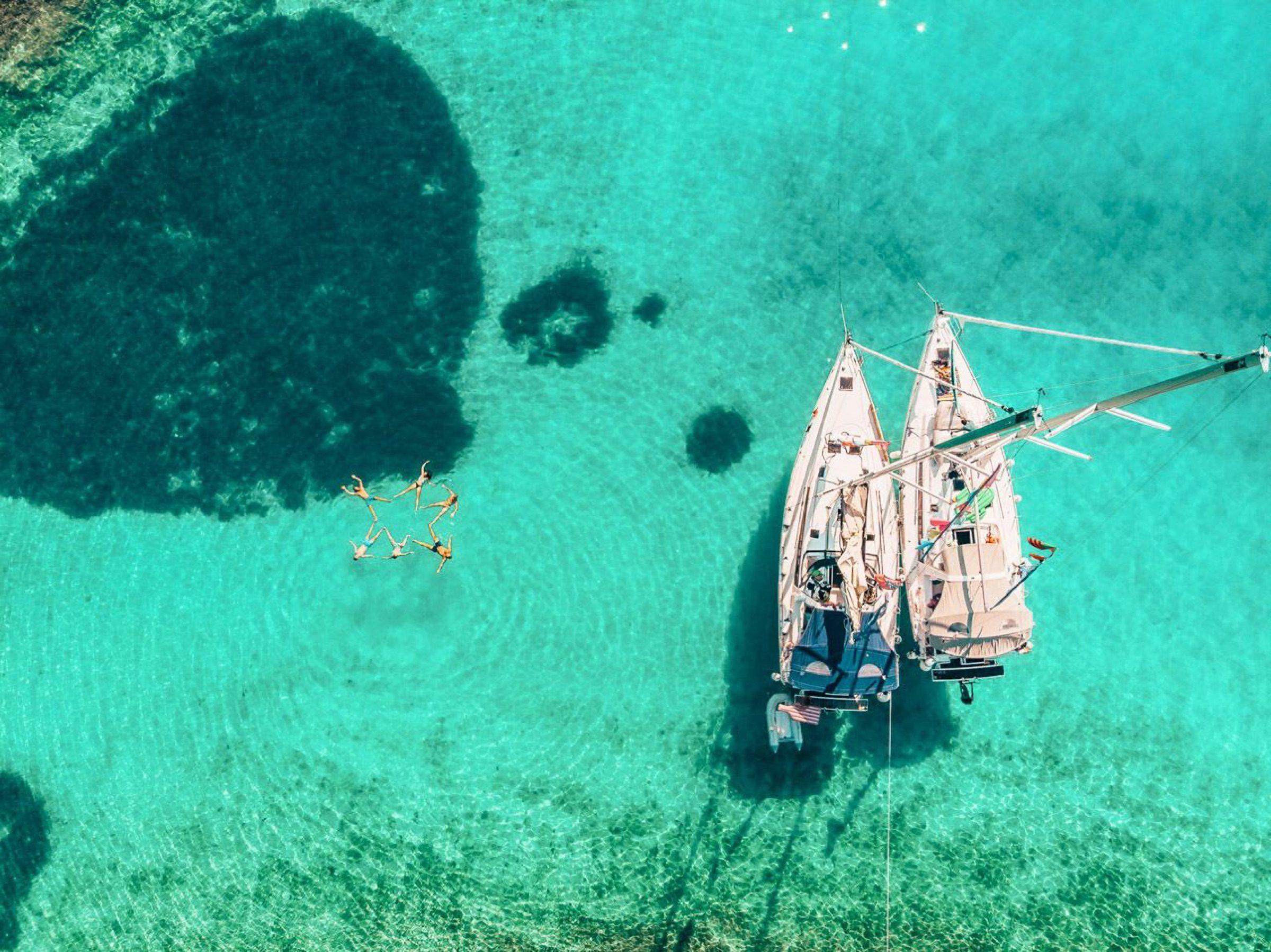
Croatia island hopping means travelling between several Adriatic islands in one trip, usually starting from Split or Dubrovnik. Most routes combine two to four islands, such as Brač, Hvar, Vis, Korčula and Mljet, moving by public ferry, catamaran, private transfer or sailing yacht. Your starting point and trip length decide which islands fit together.
Island hopping in Croatia means building a trip around several islands rather than one base. You might spend two nights on Brač, cross to Hvar for a few more, then finish somewhere slower like Vis, moving between them by ferry, catamaran or yacht.
There is no shortage of choice. Croatia's official register lists 1,244 islands, islets and rocks along the Adriatic, yet only around 50 are inhabited, and fewer still have regular ferry links. In practice, most Croatian island hopping happens across a small group of well-connected islands off Split and Dubrovnik.
How you move between them shapes the whole trip. Public car ferries, mostly run by the state operator Jadrolinija, are cheap and run all year, but they keep to fixed timetables and often dock away from the main towns. Catamarans are faster and land in town centres, though they carry foot passengers only. Private transfers and water taxis leave when you want, at a price. A sailing yacht, with a Skipper on board or as part of an organised trip, takes the timetable out of it altogether: you sleep on board, swim from the deck and move on when your crew is ready.
Getting it right comes down to three decisions: which islands to combine, how to travel between them and how long to stay. That is what the rest of this guide covers.
Ask for the best islands in Croatia and you will hear the same famous names. For island hopping, though, the best Croatian islands are the ones that connect well. Of all the Croatia islands, six do most of the work on a typical route: Šolta, Brač, Hvar, Vis, Korčula and Mljet. What matters is the role each one plays, and which port you arrive at.
Šolta is the easy opener. It is the shortest hop from Split, around 30 minutes by catamaran to Rogač, which makes it a good first night or a simple day trip.

Brač is usually the first real stop out of Split, and it has three useful ports. The car ferry lands at Supetar in 50 minutes, catamarans reach Bol on the south coast in about 75, and Milna on the west coast sits on the main catamaran line south. There is no car ferry from Split to Bol, so with a car you will be driving across the island.
Hvar is the connector. It sits on both the Vis line and the coastal catamaran route to Dubrovnik, so it fits almost any itinerary. Choose your port carefully, though. The car ferry from Split lands at Stari Grad, around 20 km by road from Hvar Town, so foot passengers heading for the harbour town should take the catamaran instead.
Vis sits apart. As the furthest inhabited island from the mainland, it has fewer connections than its neighbours, which is why it usually ends a route rather than sitting in the middle of one. The slower pace that comes with that distance is much of its appeal.
Korčula is the hinge between the two halves of the coast, with year-round catamarans to both Split and Dubrovnik. Mljet anchors the south and is easiest to reach from Dubrovnik.
The best islands to visit in Croatia on a first trip are rarely the most remote. Lastovo, Dugi Otok and the Kornati reward a longer stay, but sparse connections make them hard to fit into a multi-island route. For hopping, the top islands in Croatia are the ones you can move between without doubling back. For what each island is like once you arrive, from beaches to old towns, see our Croatia Islands Guide.
Before choosing a Croatia island hopping route, it helps to know one thing about how the ferries work. Most lines run out of Split like spokes on a wheel. Only one runs the length of the coast: a catamaran corridor linking Split with Milna on Brač, Hvar Town and Korčula Town before reaching Dubrovnik, with some summer sailings calling at Pomena on Mljet.
That shape decides which routes flow and which ones don't. Follow the corridor and moving on is a single crossing. Zigzag between spokes and you spend your days in ferry ports, often heading back to Split in between. Every Croatia island hopping itinerary below is built around that logic.
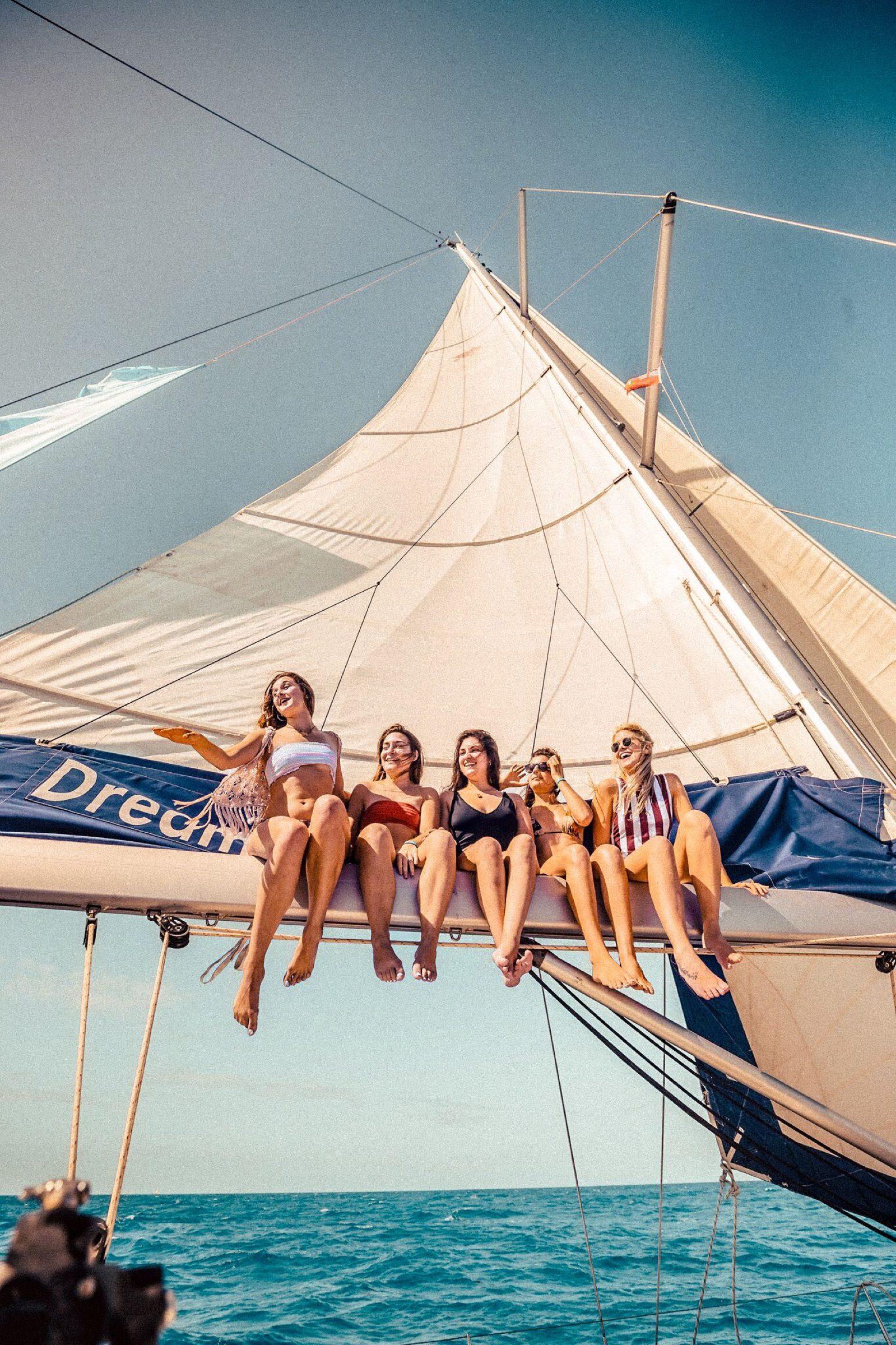
This is the classic central Dalmatian loop, and the easiest introduction to the Split Croatia islands. The usual order is Split, Brač, Hvar and then Vis, before returning to Split. Each crossing takes you a little further from the mainland, and Vis comes last because it has the fewest onward connections.
The three islands feel different enough to justify every move. Brač is the closest and largest of the three, with Bol on its south coast and Milna on its west. Hvar is the busiest, its harbour full late into the evening. Vis is slower and quieter, and the pace of a trip tends to drop the moment you arrive.
Island hopping from Split on this loop became much simpler in 2026, when Jadrolinija added a daily summer catamaran from Split to Bol, Hvar and Vis, running from mid-June to mid-September. Outside those dates, the year-round catamaran to Vis calls at Hvar Town or Milna only on certain days, so check the timetable before you fix the order.
This route suits a first visit of five to seven days, with around two nights on each island.
If you would rather unpack once, Split works well as a base. The islands near Split are close enough for day trips: Šolta is around 30 minutes by catamaran, Supetar on Brač about 50 minutes by car ferry, and Hvar Town has up to 17 sailings a day from Split in summer.
The trade-off is time on the water every day, and timetables that are not always built around visitors. Some catamarans leave the islands early in the morning so residents can reach Split for work, which can make a return trip awkward. For Split Croatia island hopping, plan each day around the last sailing back rather than the first one out.
This approach suits short trips of three or four days, or anyone who wants the city in the evenings.
Dubrovnik is the alternative starting point, and the Croatian islands near Dubrovnik give a trip a different character. Ferries and catamarans leave from Gruž port, a short drive from the Old Town, rather than from the Old Town harbour.
The closest options are quick. Boats to Lokrum leave the Old Town harbour every half hour in season, and Jadrolinija's passenger line links Gruž with the three inhabited Elaphiti islands: Koločep, Lopud and Šipan. For a longer Dubrovnik Croatia island hopping trip, head north. Korčula has year-round connections, with up to seven crossings a day in high season, and in 2026 a new daily catamaran linked Dubrovnik, Pomena and Korčula from May to October, timed so Mljet National Park works as a day trip.
From Korčula, the corridor continues to Hvar, Brač and Split, so a Croatia, Dubrovnik and islands trip can finish in Split rather than doubling back. This one-way version suits travellers with a week or more who want to see both halves of the coast.
A good rule of thumb is one island for every two nights. Each move costs around half a day once you count checking out, getting to the port, waiting for the crossing and settling in again, so adding islands quickly eats into the time you actually spend on them.
| Trip length | Islands | Suggested route | Why it works |
|---|---|---|---|
| 3 days | 1 to 2 | Split base with day trips to Šolta or Brač, or two nights on Hvar | One move at most, no luggage on the water |
| 4 days | 2 | Split, one night on Brač, two on Hvar | Two short crossings on frequent lines |
| 5 days | 2 to 3 | Split, Brač and Hvar, adding Vis when the summer direct line runs | Follows the order the islands sit from the mainland |
| 7 days | 3 to 4 | Split, Brač, Hvar and Vis loop, or Split to Dubrovnik one-way via Hvar, Korčula and Mljet | Two nights per island, one direction of travel |
| 10 days | 4 to 5 | Split to Dubrovnik one-way via Brač, Hvar, Korčula and Mljet | Uses the coastal catamaran corridor end to end |
| 2 weeks | 5 to 6 | Central loop with Vis and Šolta, then south via Korčula and Mljet to Dubrovnik, with Elaphiti day trips | Covers both halves of the coast without doubling back |
On a 3 day island hopping Croatia trip, Split makes the best base, because a single night on an island leaves little time once the crossings are counted. With 4 day or 5 day island hopping in Croatia, two islands done properly usually beat three done in a rush.
Croatia island hopping in 7 days is where your route choice matters most. The central loop gives you more time on fewer islands. The one-way run from Split to Dubrovnik covers more coast, but means flying into one city and out of the other.
With a Croatia island hopping itinerary of 10 days or 2 weeks, the full length of Dalmatia opens up. For 2 weeks in Croatia island hopping, the cleanest plan is a week on the islands off Split, then south along the corridor, so you never travel the same stretch twice.
Think of these as planning frames rather than day-by-day schedules. If you would rather sail a week with the stops already set, see the Croatia Original route.
Most people get around on public ferries and catamarans, run by a handful of operators: Jadrolinija, the state-owned and largest, alongside Krilo (Kapetan Luka), TP Line and Krilo Shipping Company. Ferries to Croatian islands from Split and Dubrovnik run all year, with far more sailings between May and October.
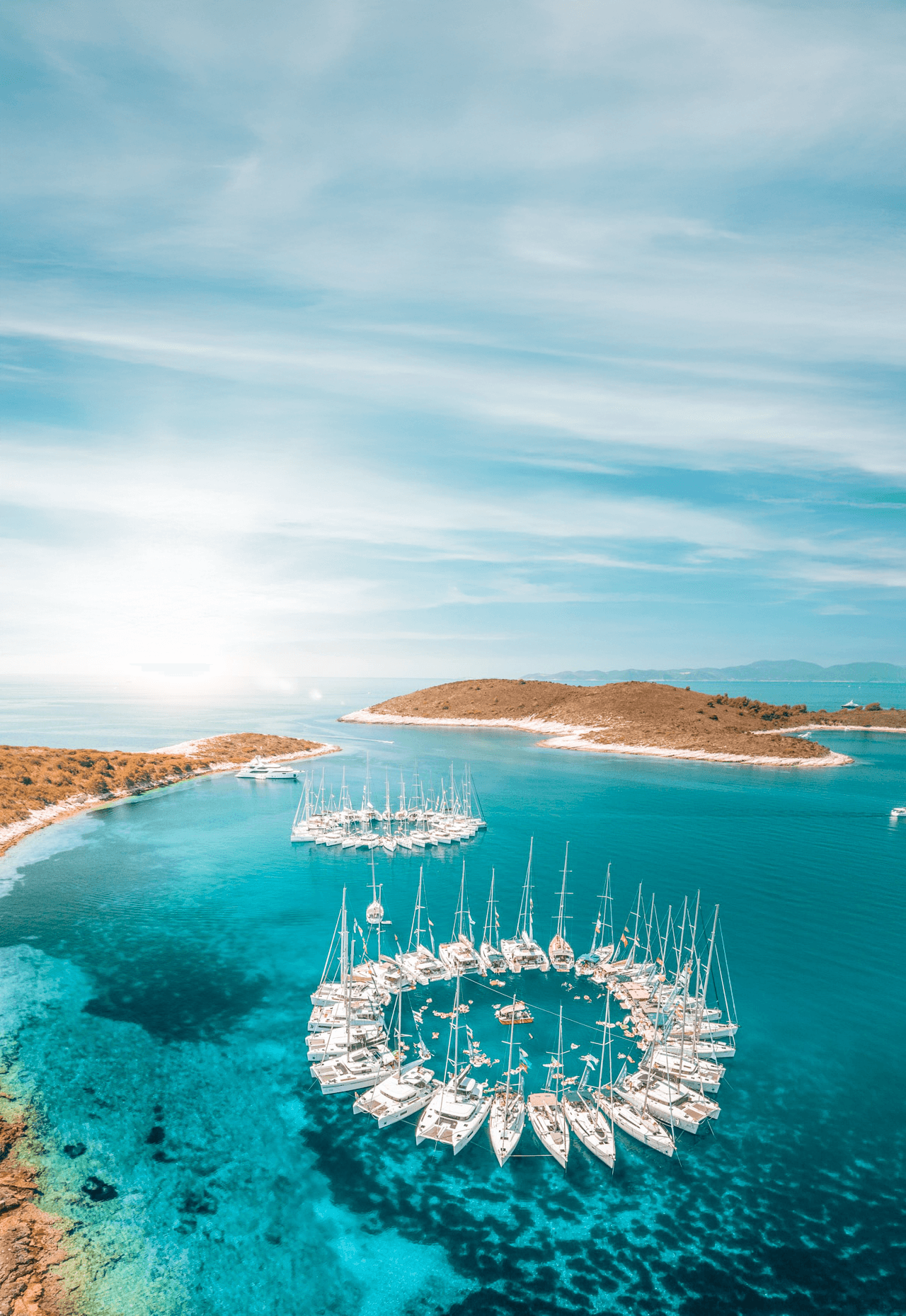
This is the first choice you will make, and it affects more than speed. A Croatia island ferry carrying cars is slower and often lands at a different port from the island's main town. Catamarans take foot passengers only, but they are quicker and usually drop you right in the centre.
| Crossing | Type | Typical time |
|---|---|---|
| Split to Rogač (Šolta) | Catamaran / car ferry | About 30 minutes / about 1 hour |
| Split to Supetar (Brač) | Car ferry | 50 minutes |
| Split to Bol (Brač) | Catamaran | 75 minutes |
| Split to Vis Town | Catamaran / car ferry | About 1 hour 10 minutes direct / about 2 hours 20 minutes |
| Hvar Town to Vis (summer line) | Catamaran | About 35 minutes |
| Split to Dubrovnik (via the islands) | Catamaran | About 4 hours 30 minutes |
Times vary by sailing, and catamarans that call at several islands on the way take longer.
For short car ferry crossings such as Split to Supetar, turning up on the day usually works. Catamarans to Hvar, Korčula and Vis are a different story in July and August, when seats can sell out, so book those ahead on the operator's website or app. It is worth checking luggage rules too: Krilo, for example, includes up to 23 kg per passenger.
When the timetable doesn't fit, private transfers and water taxis fill the gap, at a much higher cost per person. Organised trips take the logistics off your hands entirely, whether that is a day excursion from Split or Dubrovnik or a week-long sailing trip where you stay on board.
Croatia ferries are the backbone of most island hopping, but they also set its rhythm. You travel when the timetable says, between the ports it serves.
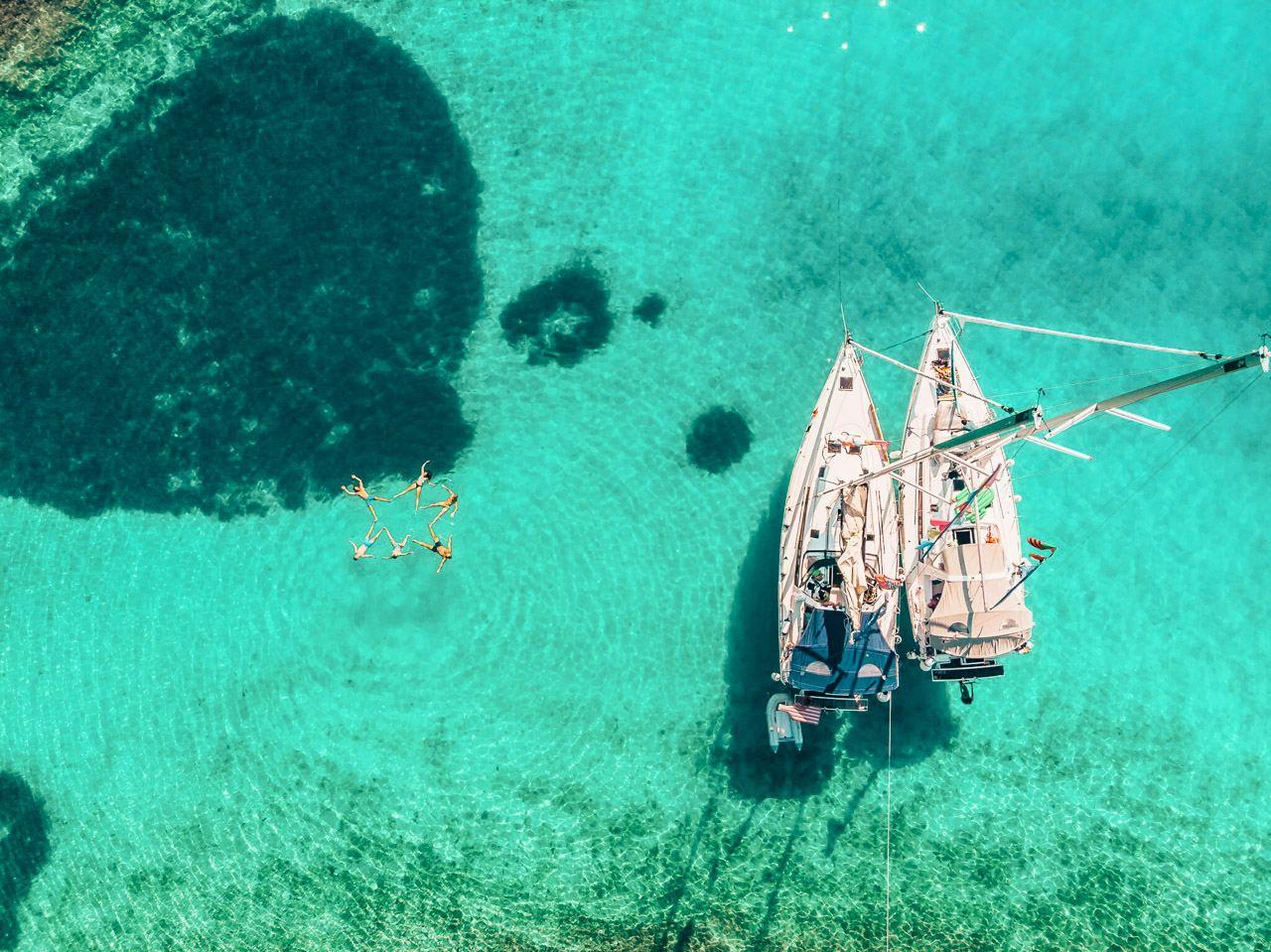
There is no single right answer here, only the one that fits how you want your days to feel. Ferries are the cheapest way to move between islands. Private transfers are the most flexible per crossing. Sailing the Croatian islands by yacht is the only option that takes ports and timetables out of the picture.

| Ferry and catamaran | Private transfer | Sailing yacht | |
|---|---|---|---|
| When you travel | Fixed timetables | Whenever you book | Whenever you choose, weather permitting |
| Where you arrive | Ferry ports only | Most harbours | Towns, bays and anchorages |
| Luggage | Carried between port and accommodation | Carried door to harbour | Stays on board all week |
| Accommodation | Booked separately on each island | Booked separately on each island | The yacht itself |
| How you pay | Per crossing | Per crossing, at a premium | Per week, by cabin or whole yacht |
| Main limitation | Spoke-shaped network, summer sell-outs | Price | Needs a Skipper unless you hold sailing qualifications |
| Best for | Short trips, tighter budgets | Filling a gap in a ferry route | A week or more across several islands |
Ferries reward careful planning, and private transfers can rescue a timetable that doesn't quite work. Sailing Croatia's islands changes the shape of the trip altogether, because the yacht is your transport and your room at the same time.
If sailing appeals, a Croatia island hopping yacht charter route can be a loop from the Split or Trogir area, a one-way passage south, or an organised week such as Yacht Week, where yachts sail a set route together. More on that below.
The practical season for island hopping in Croatia runs from May to early October, because that is when the full ferry and catamaran network is running. Which month suits you best depends on what you are travelling for.
If easy connections matter most, timing is everything. Many of the most useful lines are seasonal. In 2026, the Split to Pomena catamaran ran roughly from April to October, the Dubrovnik, Mljet and Korčula service from May to mid-October, and the direct Split, Bol, Hvar and Vis line only from mid-June to mid-September. Outside those windows the network shrinks back to its year-round core, and multi-island routes get much harder to piece together.
Seasonal lines, 2026
For swimming, the sea usually passes 20°C from around mid-June and stays warm into September. Late May is lovely on land, but the water is noticeably cooler.
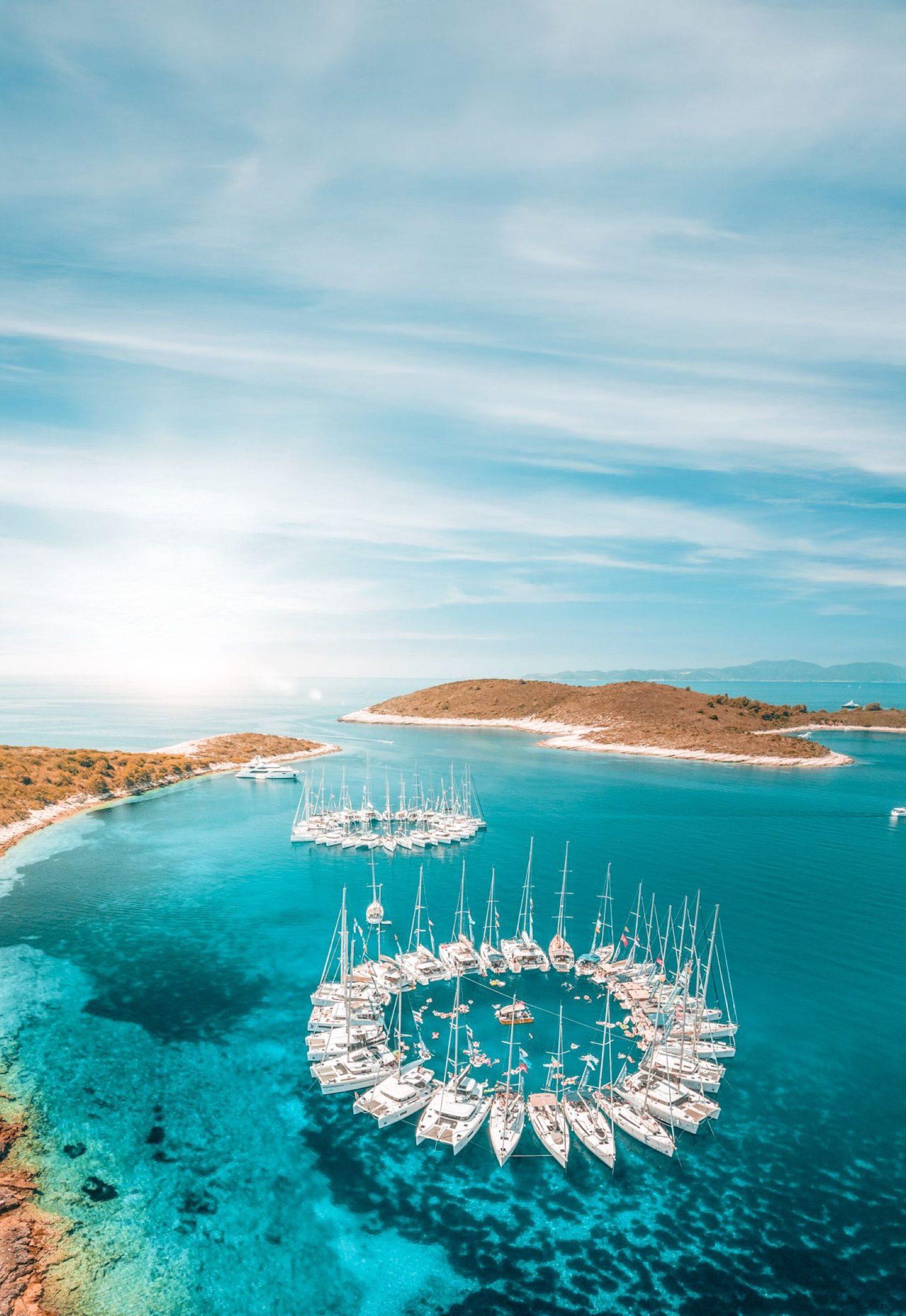
July and August bring the busiest ports, the highest accommodation prices and the catamarans most likely to sell out. They also bring the longest evenings and the fullest social calendar, with island towns at their liveliest and Ultra Europe in Split each July. For more on that side of the coast, see our guide to Croatia's party islands.
June and September sit in between. Most connections are still running, the sea is warm enough, and there is more room on board. If you want the widest choice of routes, aim for late June or September. If you want the coast at its busiest, plan for July or August and book ahead.
The ferries are rarely what makes island hopping expensive. In 2026, most catamaran crossings between the main islands cost somewhere between €10 and €28, so the real budget goes on where you sleep and how often you move.
Accommodation is where costs climb. Hvar and Dubrovnik tend to be pricier in July and August than Vis, Šolta or Brač, and every move means a new booking, sometimes with a minimum stay in peak season. Food, drinks and activities follow a similar pattern, with the busiest harbour towns costing more than quieter villages on the same island.
On a yacht
Sailing works differently. You pay for the week, by cabin or by whole yacht, and your accommodation is covered because you sleep on board. Port fees, fuel and meals ashore are usually extra. For how that works on a Yacht Week, see what's included and additional costs.
| Crossing (one way, 2026 fares) | Fare |
|---|---|
| Split to Supetar (Brač), catamaran | €10 |
| Split to Bol (Brač) | €23 |
| Split to Hvar | €25 |
| Split to Vis | €28 |
| Hvar Town to Korčula | €25 |
| Hvar Town to Pomena (Mljet) | €25 |
Fares change each season, so check with the operator before you book. If you are bringing a car, vehicle tickets on the car ferries add up quickly over several crossings.
Most island hopping trips that go wrong do so at the planning stage, usually because the route looked simple on a map. A few decisions made early save a lot of time in ferry queues later.

Split and Dubrovnik are the two main gateways. If you can fly into one and out of the other, a one-way route along the coast saves you a full day of backtracking. If you can only use one airport, build a loop from it instead.
Hvar to Korčula is one catamaran. Vis to Korčula usually isn’t. Before you commit to an order, check that each move has a direct sailing on the day you need it, not just a connection somewhere in the week.
On islands with more than one port, this makes a real difference. Staying in Hvar Town but leaving on the car ferry from Stari Grad adds a 20 to 30 minute transfer before you even join the queue.
In July and August, seats on the busiest catamaran lines can sell out. Book them at the same time as your accommodation, and plan each day around the last sailing rather than the first.
Every move means getting your bags from your room to the port and back again, often over cobbles and steps. One soft bag is far easier than a large suitcase, and some operators set luggage limits.
Strong winds can disrupt sailings, and smaller catamarans feel a rough sea more than the big car ferries. Avoid a tight crossing on the day you fly home.
Before you book, it is worth a quick check:
Sailing is the most efficient way to combine several Croatian islands, because the yacht does the work of both ferry and hotel. You wake in a bay rather than beside a ferry terminal, swim before breakfast, and move on when your crew is ready rather than when a timetable says.
It also opens the parts of the coast ferries never reach: anchorages between towns, swim stops off uninhabited islets, harbours too small for a catamaran. Distances in central Dalmatia are short, so a week can take in three islands without long days at sea.
Good to know
The practical points are simple. Unless you hold recognised sailing qualifications, you will need a Skipper to handle navigation, mooring and anchoring. Wind and sea state shape where you stop each night, so the plan gives the week its structure rather than a fixed script. And space on board is shared, which suits a group of friends or travellers open to meeting new people.
Yacht Week is one organised way to sail the Croatian islands. Founded in 2006, it began in Croatia, and the Croatia Original route is a seven-night round trip from the Split and Trogir area to Brač, Hvar and Vis, with a professional Skipper on every yacht. The final island is Vis, where dinner is at Fort George, a hilltop fortress above the island. Travelling solo or as a pair, you can book a single cabin and join a yacht of six to eight guests.
The same coast is sailed in several ways, from the Original route to weeks built around music. See four ways to sail Croatia with Yacht Week, or explore Yacht Week in Croatia.
Croatia’s official Register of Islands records 1,244 islands, islets and rocks: 78 islands, 524 islets and 642 rocks. Other sources give slightly different totals because they count differently, but 1,244 is the figure used by the Croatian government and hydrographic institute.
Around 50, depending on the definition. A census-based count gives 50 inhabited islands including the Pelješac peninsula, while a government figure reported to parliament puts the number permanently or temporarily inhabited at 45. Only a fraction of these have regular ferry connections.
Pick a starting point, usually Split or Dubrovnik, then choose two to four islands that sit on connected ferry or catamaran lines. Allow around two nights per island, book catamarans ahead in July and August, and stay near the port you will leave from.
It depends on time and budget. Ferries and catamarans suit short trips and lower budgets. A Croatia island sail suits a week or more across several islands, because the yacht is both transport and accommodation, and it reaches bays that ferries do not.
The network has a simple shape. Split is the hub, with lines out to Šolta, Brač, Hvar and Vis. One catamaran corridor runs the length of the coast, via Milna, Hvar Town and Korčula Town to Dubrovnik. Operators such as Jadrolinija and Krilo publish route maps and timetables online.
Yes. Organised sailing weeks and multi-day tours bundle transport and accommodation into one booking. Yacht Week’s Croatia routes are seven-night sailing weeks from the Split and Trogir area, with a professional Skipper on every yacht and cabin or whole-yacht options.
Split is the most practical base, because more island lines start there than anywhere else on the coast. Hvar Town works well in the middle of a route, sitting on both the Vis line and the Split to Dubrovnik corridor. For the southern islands, base yourself in Dubrovnik.